Botox has been one of the most widely used aesthetic treatments for decades. But what actually happens if you continue Botox injections for 20 years or more?
Patients often ask whether long-term use leads to permanent changes, dependency, or damage. The reality is more nuanced. When administered correctly by a qualified practitioner, Botox remains safe even with long-term use, but it does create predictable structural and muscular changes over time.
This article explains those changes from a clinical perspective, based on long-term treatment patterns seen in aesthetic practice.
How Botox Works Over Time
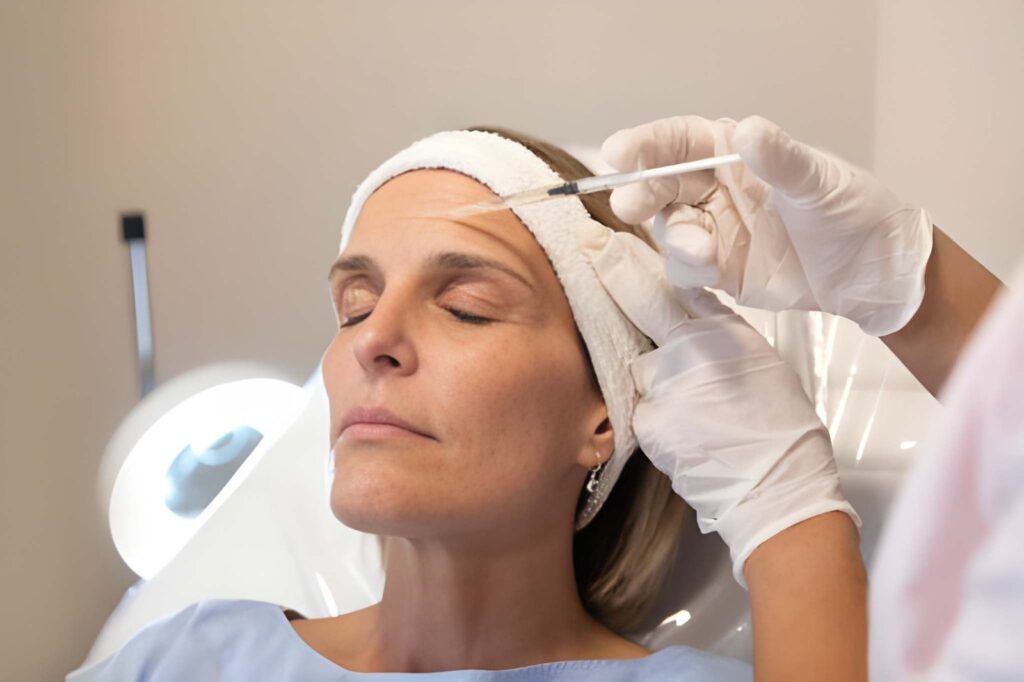
Botox (botulinum toxin type A) temporarily blocks nerve signals to targeted muscles, reducing their movement. Over repeated treatments:
- Muscles contract less frequently
- Wrinkle formation slows
- Skin experiences reduced mechanical stress
With consistent use over years, this leads to progressive muscle adaptation, which is where long-term effects begin.
What is the rule of 3 in Botox?
Muscle Atrophy: The Most Significant Long-Term Effect
One of the most well-documented long-term effects of Botox is muscle atrophy.
What happens clinically:
- Repeated inactivity causes treated muscles to shrink slightly
- The muscle becomes weaker and less expressive
- Wrinkles become less prominent even without frequent injections
Supporting evidence:
Peer-reviewed studies (PubMed: long-term botulinum toxin facial muscle) show that prolonged neuromodulator use can reduce muscle thickness and activity over time.
What this means for patients:
- You may need lower doses over time
- Results may last longer
- Facial expressions may appear softer or less dynamic
What Should I Avoid Before Botox?
Skin Texture Improvements
Long-term Botox users often notice smoother skin — not just fewer wrinkles.
This happens because:
- Reduced muscle movement prevents repeated skin folding
- Collagen breakdown slows in treated areas
- Fine lines may fade significantly
In some patients, this creates a preventative anti-aging effect, especially when Botox is started early.
Changes in Facial Balance
After many years of Botox:
- Untreated muscles may become more dominant
- Facial symmetry can subtly shift
- Over-treatment in one area can affect natural expression
This is why treatment planning becomes more important over time, not less. A skilled practitioner will adjust injection patterns to maintain natural balance.
What is the Best Age to Get Botox?
Does Botox Stop Working After 20 Years?
In most cases, no. Botox does not “stop working,” but responses can change:
- Some patients develop mild resistance (rare)
- Others experience longer-lasting results
- Dosage and injection sites may need adjustment
True resistance is uncommon and usually linked to antibody formation, which occurs in a very small percentage of patients.
When Should You Take a Break from Botox?
Taking a break is not always necessary, but may be recommended if:
- Facial movement appears overly restricted
- Muscle thinning becomes noticeable
- You want to reassess your natural baseline
A break of 3–6 months typically allows partial muscle recovery.
Are There Any Negative Long-Term Effects?
When performed by a qualified practitioner, long-term Botox is generally safe. However, potential concerns include:
- Over-softened facial expressions
- Muscle imbalance if poorly administered
- Dependency on aesthetic maintenance
These risks are technique-dependent, not product-dependent.
Importance of Choosing a DHA-Licensed Practitioner
In Dubai, Botox should only be performed by a DHA-licensed aesthetic professional.
This ensures:
- Correct dosing and placement
- Long-term facial harmony
- Reduced risk of complications
Unqualified injections are the leading cause of unnatural results — especially over long-term use.
Before and After: What 20 Years Can Look Like
With proper treatment:
- Wrinkles are significantly reduced
- Skin appears smoother and more youthful
- Aging progression is slowed
Can a 70 Year Old Woman Get Botox?
Should You Continue Botox Long-Term?
Botox is not a one-size-fits-all lifelong treatment. The decision to continue depends on:
- Your aesthetic goals
- Muscle response over time
- Professional clinical advice
Many patients transition to lower-frequency maintenance treatments after long-term use.
Conclusion
After 20 years of Botox, the most noticeable changes are muscle atrophy, smoother skin, and altered facial dynamics. These effects are not harmful when managed correctly — in fact, they often contribute to better long-term aesthetic outcomes.
The key factor is not how long you use Botox, but how well your treatment is planned and administered.
FAQs
How long does Botox last after 20 years of use?
It often lasts longer than in early treatments — sometimes 4–6 months due to reduced muscle activity.
Does Botox permanently change your face?
It can cause mild muscle thinning, but changes are generally reversible over time.
Is long-term Botox safe?
Yes, when performed by a qualified practitioner using proper techniques.
Will I look older if I stop Botox after many years?
No — you will simply return to your natural aging process, not worsen it.
Can Botox damage facial muscles permanently?
No permanent damage occurs, but prolonged inactivity can lead to temporary muscle weakening.
Author: Dr.Somayeh Mohammadian, Aesthetic Medicine Practitioner
DHA Licence No.: 93482210-001
Last Reviewed: June 2026