
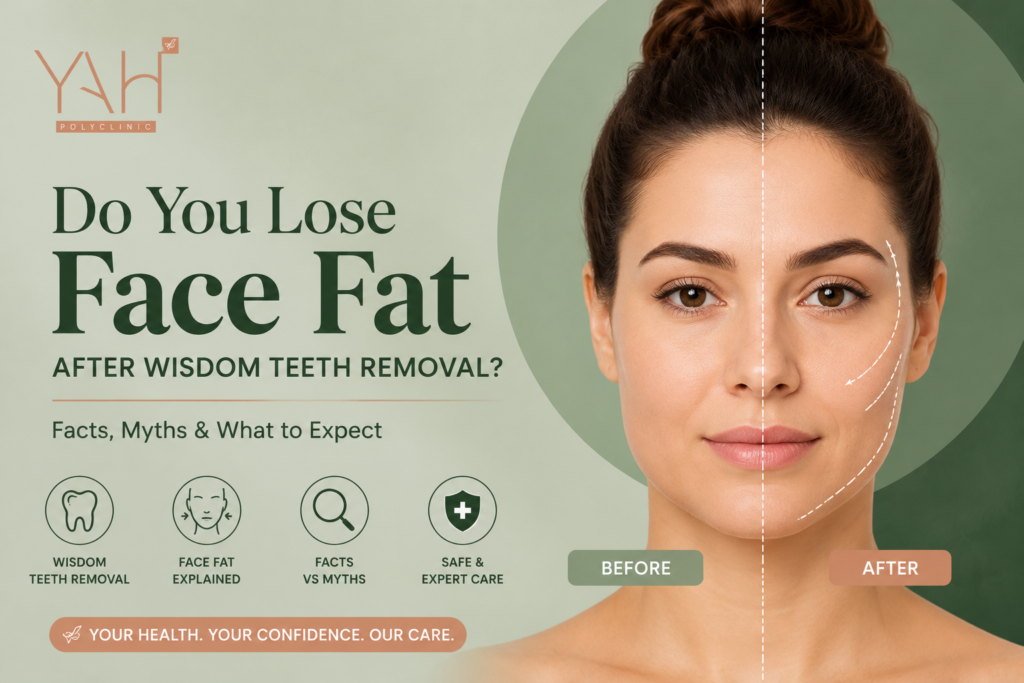
No, wisdom teeth removal does not cause genuine face fat loss. Any change in facial appearance after the procedure is almost always due to temporary swelling going down, not a reduction in actual fat tissue. The surgery affects the jawbone and surrounding gum tissue, not the fat layer beneath facial skin.
This guide explains what really happens to your face after wisdom teeth removal, why some people believe they look slimmer, and when a change might be worth mentioning to a dentist. The key fact to remember: a slimmer-looking face after extraction is swelling resolving, not fat disappearing.
What Actually Happens to Your Face During Wisdom Teeth Removal?
Wisdom teeth removal involves extracting one or more third molars from the back of the jaw, often under local or general anaesthetic. The procedure can cause short-term swelling, bruising, and stiffness in the jaw and cheek area. None of these effects involve the fat layer that gives the face its shape.
Swelling occurs because the body sends fluid and immune cells to the surgical site as part of normal healing. This is a protective response, not tissue loss. The American Association of Oral and Maxillofacial Surgeons confirms that post-extraction swelling is a standard, expected part of recovery rather than a sign of fat or tissue reduction.
Why Does Your Face Look Different After the Procedure?
Your face can look different after wisdom teeth removal mainly due to swelling, followed later by that swelling reducing back to normal. During the swollen phase, the cheeks and jawline often appear fuller or rounder than usual. As the swelling subsides over one to two weeks, the face gradually returns to its pre-surgery shape.
Some people interpret this return to normal as their face becoming slimmer, when in fact it is simply de-puffing. There is no clinical evidence that wisdom teeth removal changes the underlying bone structure or fat distribution of the face.
Does Wisdom Teeth Removal Cause Real Fat Loss?
No, the procedure does not target or remove facial fat in any way. Fat loss in the face typically results from changes in body weight, ageing, or specific cosmetic procedures designed for that purpose, not dental surgery. Wisdom teeth extraction is a localised dental procedure focused on the jaw and gum tissue.
Facial fat pads, such as the buccal fat pad in the cheek, are anatomically separate from the tooth roots and jawbone area affected during extraction. Removing a tooth does not access or disturb these fat pads. Any reports of a “slimmer face” after the procedure are explained by swelling changes, not fat reduction.
Can Diet Changes During Recovery Affect Your Weight?
Yes, but only temporarily and not specifically in the face. Many patients follow a soft-food or liquid diet for several days after surgery, which can lead to a small, short-term reduction in calorie intake. This may contribute to minor, temporary weight loss, but it affects the whole body rather than targeting facial fat.
This effect is similar to any short period of reduced eating and typically reverses once normal eating resumes. Soft-food recovery diets can cause mild, short-term weight changes, but they do not reshape the face.
What Does the Swelling Timeline Look Like After Wisdom Teeth Removal?
Swelling typically peaks within 48 to 72 hours after surgery and then gradually decreases over the following one to two weeks. The exact timeline varies depending on the complexity of the extraction and individual healing rates. Most people see noticeable improvement by day five to seven.
The British Association of Oral and Maxillofacial Surgeons outlines this as a standard recovery pattern for routine extractions. Understanding this timeline helps patients set realistic expectations rather than assuming any change is permanent.
- Day 1–2: Swelling typically increases and peaks
- Day 3–4: Swelling begins to plateau or slightly reduce
- Day 5–7: Noticeable reduction in swelling and discomfort
- Week 2: Most swelling has resolved; face returns to normal appearance
If swelling has not improved by the two-week mark, this warrants a follow-up with your dentist or oral surgeon.
How Can You Reduce Swelling Safely After Surgery?
Swelling is best managed with cold compresses, head elevation, and following your dentist’s specific aftercare instructions. Applying a cold compress to the outside of the cheek for the first 24 to 48 hours can help limit swelling. Keeping the head elevated, even while sleeping, also supports fluid drainage.
- Apply a cold compress for 15–20 minutes at a time during the first two days
- Keep your head elevated, especially when lying down
- Avoid strenuous activity for the first few days after surgery
- Follow any prescribed anti-inflammatory medication as directed
- Stay hydrated and stick to the recommended soft-food diet
Following these steps does not change facial fat, but it does help swelling resolve more quickly and comfortably.
When Should You Be Concerned About Facial Changes After Extraction?
You should contact your dentist if swelling worsens after the first few days, spreads beyond the jaw area, or is accompanied by fever. These can be signs of infection rather than normal healing. Persistent or unusual facial asymmetry should also be assessed promptly.
Normal post-extraction swelling is symmetrical and gradually improves. Any swelling that increases after day three, rather than decreasing, should be checked by a dental professional without delay.
What Other Symptoms Suggest a Complication?
Complications are usually signalled by increasing pain, fever, persistent bad taste, or swelling that does not improve after the first week. A dry socket, where the blood clot at the extraction site is disrupted, is a common complication that causes increased pain rather than facial fat changes. This is unrelated to facial appearance but should still be assessed quickly.
If you notice any of these symptoms, contact your dental clinic rather than waiting for a scheduled review. Early assessment helps prevent complications from worsening.
Why Trust Professional Guidance on This Topic?
Dental and oral surgery questions deserve answers based on clinical anatomy, not social media claims. Wisdom teeth removal is a well-studied, routine procedure performed by qualified dental surgeons worldwide, with predictable recovery patterns. YAH Polyclinic’s dental team has supported patients through wisdom teeth extractions and recovery, providing clear aftercare guidance based on each individual case.
Understanding what is normal swelling versus a genuine concern helps patients recover with confidence rather than unnecessary worry. Reliable answers on procedures like this should always come from a qualified dental professional, not unverified online claims.
Frequently Asked Questions
Does wisdom teeth removal make your face thinner permanently?
No, any slimmer appearance after wisdom teeth removal is due to swelling reducing, not permanent fat loss. The face returns to its normal pre-surgery shape once healing is complete, typically within one to two weeks.
How long does facial swelling last after wisdom teeth removal?
Swelling usually peaks at 48 to 72 hours and resolves within one to two weeks. Recovery time can vary depending on the complexity of the extraction and individual healing.
Can wisdom teeth removal change your jawline?
No, routine wisdom teeth removal does not alter jawbone structure or jawline shape. Surgical removal of impacted teeth in rare, complex cases may involve bone, but this does not affect facial fat or general jaw contour.
Why does my face look swollen after wisdom teeth removal?
Swelling occurs because the body sends fluid and immune cells to the surgical site to support healing. This is a normal, expected response and not a sign of tissue or fat loss.
Can a soft food diet after surgery cause weight loss?
Yes, a temporary soft-food or liquid diet can lead to mild, short-term weight loss due to reduced calorie intake. This affects overall body weight, not facial fat specifically, and typically reverses once normal eating resumes.
Is it normal for one side of my face to swell more than the other?
Mild asymmetry can be normal if teeth were removed from one side only. However, sudden or worsening asymmetry after the first few days should be checked by a dentist to rule out infection.
When should I see a dentist about swelling after extraction?
Contact your dentist if swelling worsens after day three, spreads beyond the jaw, or is accompanied by fever or severe pain. These can indicate infection or another complication requiring prompt assessment.
Does removing wisdom teeth affect facial fat pads like the buccal fat pad?
No, the buccal fat pad and other facial fat structures are anatomically separate from the tooth roots and jawbone. Wisdom teeth extraction does not access or affect these fat pads in any way.
Understanding the real cause of facial changes after wisdom teeth removal helps prevent unnecessary worry and sets realistic recovery expectations. YAH Polyclinic’s dental team provides clear, individual guidance before and after extraction, so patients know exactly what to expect at each stage. Book a consultation with YAH Polyclinic to discuss your wisdom teeth removal and recovery plan with a qualified dental professional.
AUTHOR
This guide was reviewed by the dental team at YAH Polyclinic, a DHA-licensed clinic in Town Square, Dubai, offering general and surgical dental care including wisdom teeth extraction. Our dentists provide individual aftercare guidance for every extraction patient, based on established oral surgery recovery standards. Last medically reviewed: June 2026.